
If your Sunnyside office runs on email, a point-of-sale system, or cloud-based files, a single hour of downtime can cost you hundreds of dollars and a frustrated client relationship you worked hard to build.
Managed IT support in Sunnyside gives small offices a proactive, always-on partner instead of a reactive repair call, and this guide breaks down exactly why that difference matters for your bottom line and your daily sanity.
Key takeaways from this article:
- Small professional offices in Sunnyside can lose $300 to $500 per hour during IT downtime, making proactive managed IT economically justified even for lean budgets.
- Roughly 43 to 60 percent of small businesses experience at least one cyber incident per year, meaning unmonitored Sunnyside networks are statistically overdue for a costly event.
- Managed IT providers typically respond to support tickets in under 5 minutes and resolve about 80 percent of issues on the first contact, compared to hours of waiting with break-fix vendors.
- 24/7 proactive monitoring catches problems before users notice them, which is a fundamentally different model than calling for help after operations have already stopped.
The Real Cost of Downtime for Sunnyside Offices
Most Sunnyside businesses are small professional offices, retail shops, and service firms where every billable hour and every customer interaction depends on a working internet connection, a functioning POS terminal, or a responsive email inbox.
Conservative national estimates place the cost of IT downtime for a small professional office at $300 to $500 per hour in lost productivity and delayed revenue, and that number climbs fast when a busy Friday afternoon is the moment everything stops.
A single two-hour outage during peak hours could erase the margin on an entire day of work, which means the monthly cost of managed IT support is often paid back in full by preventing just one incident.
Sunnyside owners who have experienced a network failure mid-transaction or a ransomware lockout on a Monday morning understand this math intuitively, even without a spreadsheet to prove it.
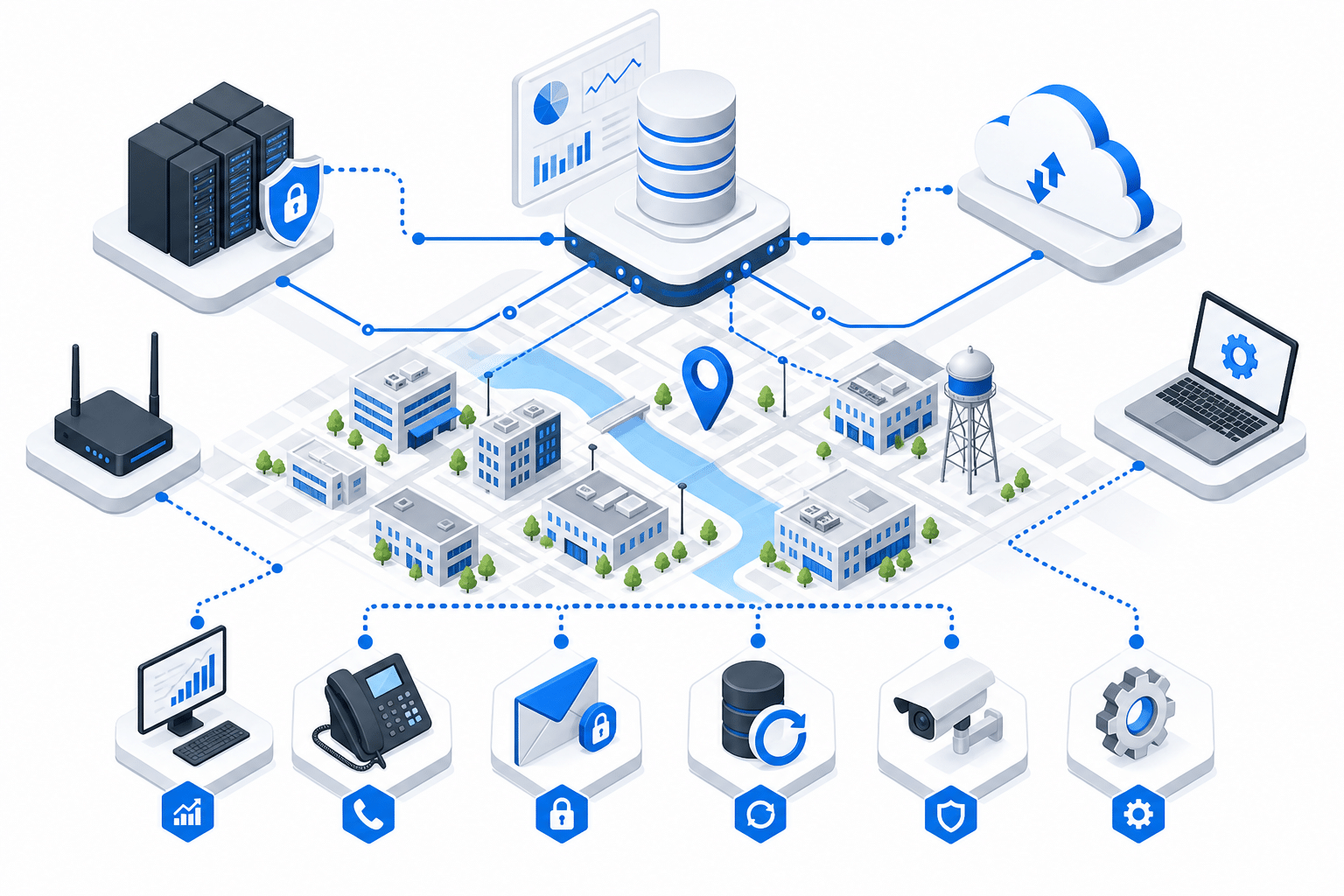
Managed IT Support: Key Benchmarks for Sunnyside Businesses
Data drawn from national SMB studies, managed IT provider service benchmarks, and conservative local estimates based on published downtime cost ranges. Individual results will vary by office size and industry.
Cybersecurity Risk Is Not Just a Big-Business Problem
National studies consistently show that 43 to 60 percent of small businesses are hit by at least one cyber incident every year, and small offices are frequently targeted precisely because attackers know their defenses tend to be thin.
An unpatched router, a staff member reusing a password, or a phishing email that slips past a basic spam filter are all realistic entry points for a Sunnyside office that is running without managed security oversight.
Managed IT support addresses these vulnerabilities through continuous monitoring, automated patching, and endpoint protection that most small offices could never implement or maintain on their own.
The question for a Sunnyside business owner is not whether a cyber incident could happen without professional IT support, but whether they want to find out the hard way that the odds were not in their favor.
Response Time and First-Contact Resolution: What the Numbers Mean for Your Office
When a managed IT provider advertises sub-5-minute response times, that is not a marketing promise about picking up the phone. It means a technician is actively engaging your ticket while the problem is still small enough to fix quietly.
Compare that to the break-fix model, where you call when something is already broken, wait hours for a callback, and then wait again for a technician who may not carry the right tools for your specific setup.
A mature managed IT operation resolves roughly 80 percent of issues on the first contact, which means most Sunnyside support requests get fully closed without a follow-up visit, a second call, or a half-fixed system sitting in the corner for a week.
For a small office where one person often handles both sales and operations, that first-call resolution rate is the difference between a 10-minute interruption and a half-day of chasing a problem that keeps coming back.

Proactive Monitoring vs. Break-Fix: A Sunnyside Perspective
Break-fix IT support is essentially a fire department that only responds after the building is already burning, and for a Sunnyside business that depends on consistent uptime, that model carries serious operational risk.
24/7 proactive monitoring means a managed IT provider sees a failing hard drive, an unusual traffic spike, or an expiring SSL certificate before any of those things become a customer-facing problem.
Providers that offer real-time monitoring report that a significant share of issues are detected and resolved without the client ever knowing there was a problem, which is exactly the kind of invisible value that justifies a monthly service agreement.
Unmonitored networks in small offices are also far more exposed to cascading failures, where one unpatched vulnerability or one unchecked misconfiguration quietly grows into a full outage or a data breach.
What Sunnyside Business Owners Actually Expect From IT Support
Neighborhood-level research on Sunnyside business culture consistently surfaces the same preference: owners want fast, human, phone-available support from someone who already knows their setup and does not need a 20-minute explanation before they can help.
That expectation aligns perfectly with what a well-run managed IT provider delivers: a dedicated technical account manager who understands your business goals, your critical systems, and your busiest hours.
A technical account manager is not just a help-desk contact. They are the person who reviews your IT environment quarterly, flags aging hardware before it fails, and recommends investments that match your growth plan rather than just patching problems as they appear.
For a Sunnyside retail shop that needs to stay open on Saturday afternoon or a professional services firm that bills by the hour, having that kind of strategic IT relationship is a meaningful business advantage over competitors who are still calling a break-fix vendor and hoping for the best.
Choosing a Managed IT Partner That Fits the Sunnyside Business Model
Not every managed IT provider is built for small offices, and Sunnyside businesses should look specifically for a partner whose service agreements include defined response-time guarantees, proactive monitoring, patch management, and a named point of contact.
Ask any prospective provider what their average response time is, what percentage of tickets they close on the first contact, and how they handle after-hours emergencies for clients in your size range.
A provider that cannot answer those questions with specific numbers is likely not operating with the kind of mature processes that make managed IT actually work, and vague reassurances about being available are not a substitute for a documented service-level agreement.
The right managed IT partner for a Sunnyside business will feel less like a vendor and more like a part-time CTO who happens to answer the phone in under five minutes and already knows which server in your office runs hot on Tuesdays.
Frequently Asked Questions
What is managed IT support and how is it different from break-fix IT?
Managed IT support is a proactive, ongoing service where a provider monitors your systems, applies patches, and resolves issues around the clock under a fixed monthly agreement. Break-fix IT is reactive, meaning you only call when something has already failed and you pay per incident, which consistently leads to longer outages and higher total costs.
How much does managed IT support cost for a small Sunnyside office?
Monthly costs vary based on the number of users, devices, and services included, but most small offices find that a managed IT agreement costs less per month than a single hour of downtime at the $300 to $500 per hour benchmark. The best way to get an accurate number is to request a scoped quote based on your specific headcount and systems.
Can managed IT support actually prevent cyberattacks or just respond to them?
A well-configured managed IT program includes continuous endpoint monitoring, automated patching, email filtering, and threat detection tools that block many attacks before they reach your staff. No solution eliminates all risk, but the difference between a monitored and an unmonitored small-office network is substantial, especially given that 43 to 60 percent of small businesses face at least one cyber incident per year.
What should I expect in terms of response time when I submit a support ticket?
Mature managed IT providers target response times of under 5 minutes for new tickets, compared to hours or more with ad-hoc break-fix vendors. You should ask any prospective partner for their contractual response-time commitment in writing before signing an agreement.
Do I need managed IT support if I already use cloud services like Microsoft 365 or Google Workspace?
Cloud platforms reduce some IT complexity but do not eliminate the need for device management, network security, user access control, or backup verification. A managed IT provider ensures that your cloud tools are properly configured, your endpoints are protected, and your data is actually recoverable if something goes wrong.
Recent Comments